🌐 ENGLISH VERSION
This site was written in French, and this is its English translation. Small differences or imperfections are possible: the French version remains the reference. The reader comments area and the search results may still appear in French.
Your opinion matters: tell me what you would change or add. Use the contact form on the home page or leave a comment on the Blog (English and French both welcome).
THE SEARCHERS OF OAK ISLAND
“From generation to generation: who searched, and what they found.”
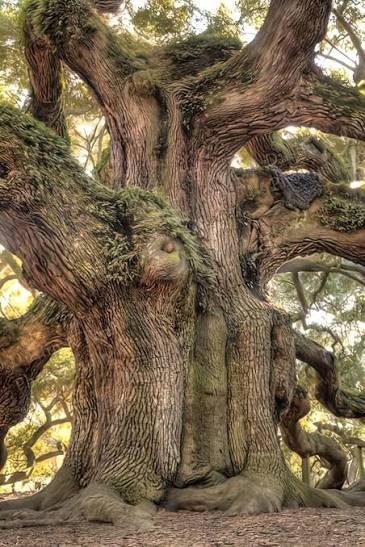
Daniel McGinnis, John Smith, Anthony Vaughan
It all starts with a boy, an oak and a pulley.
What they found. A circular depression under an oak bearing a pulley; digging down, oak platforms about every 10 feet (3 m), according to tradition.
The handover. They stop for lack of means (around 30 feet, or 9 m, according to Wikipedia). Almost everything we know comes from a single testimony by Vaughan, collected in 1849.
Onslow Company
The first to dig big… and the first to be flooded out.
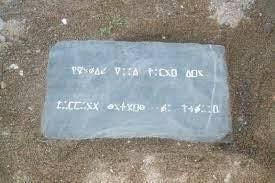
What they found. Down to about 90 feet (27 m): logs, charcoal, coconut fibre, and, according to tradition, a stone with engraved signs.
The handover. The shaft floods and the company gives up. No original document of the company survives.
Truro Company
A drill, a golden glint: too good to be confirmed.
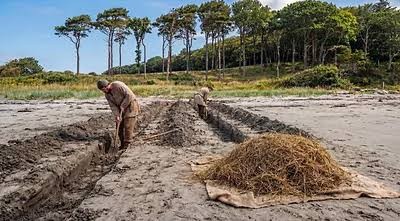
What they found. With a drill: wood, “metal in pieces” and coconut fibre at around 98 feet (30 m). Some accounts mention links of a gold chain; this has never been confirmed.
The handover. The shaft floods again; the company is dissolved around 1851.
Oak Island Association
Steam arrives, and with it the first tragedy.
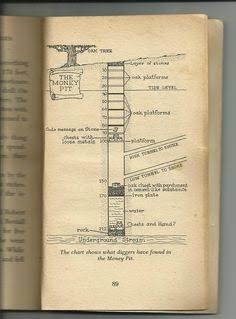
What they found. The original shaft found again at around 105 feet (32 m); tools left by earlier companies. A boiler explosion in 1861 causes the first death in the place's history.
The handover. A flood tunnel is struck around 1864; the association stops around 1865-1866.
Halifax Company (Oak Island Eldorado)
Drillings that bring up blue mud.
What they found. Exploratory drillings bring up wood, coconut fibre, clay and blue mud.
The handover. It gives up in 1867.
The 1893 prospectus and an unnamed group
A paper promising millions, a parchment nobody has seen.
What they found. An 1893 prospectus mentions a stone said to announce “two million pounds”; no dig is documented. According to one account, a drilling around 1896-1898 brought up a tiny piece of parchment bearing two letters (perhaps “vi”).
The handover. Nobody knows whether this parchment ever existed: it is to be read as a tradition.
Old Gold Salvage & Wrecking · Captain Henry Bowdoin
A future president among the investors.
What they found. Shaft cleared down to 113 feet (34 m); the borings found nothing of interest. Among the investors, the young Franklin D. Roosevelt, whose exact involvement is debated.
The handover. Their failure puts the quest to sleep for years.
William Chappell
An axe, an anchor, a pick: the island keeps tools, not chests.
What they found. A 163-foot (50 m) shaft. At around 120-127 feet (37 to 39 m): an axe, a fluke anchor and a Cornish miner's pick.
The handover. Nobody could tell who the pick belonged to. His son Mel Chappell would later be a shareholder of Triton Alliance.
Gilbert Hedden
A New Jersey industrialist fascinated by a map.
What they found. No successful find in the Money Pit. A stone engraved “H + O” at Joudrey's Cove (1936), linked by some to the Templars: not independently verified.
The handover. He hands over to an engineering professor, Edwin Hamilton.
The Restall family
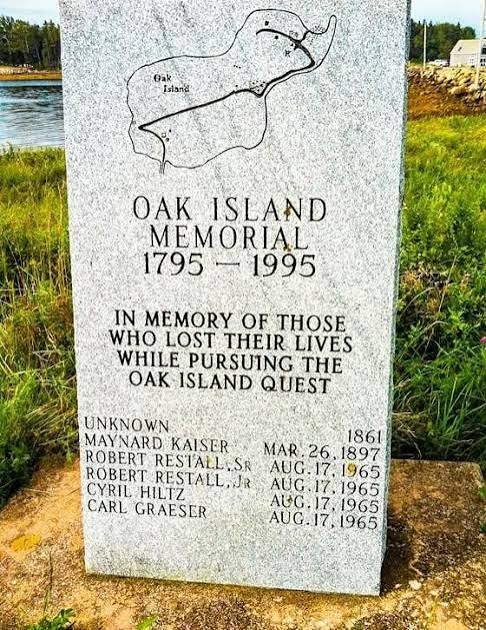
The darkest day in Oak Island's history.
What they found. No find reported. On 17 August 1965, four people lose their lives in a shaft.
The handover. This tragedy marks a turning point for safety on the island.
Robert Dunfield
When the 70-tonne crane arrives.
What they found. A 70-tonne crane digs down to 134 feet (41 m); no treasure.
The handover. He leaves a crater and a causeway linking the island to the mainland.
Fred Nolan, then his son Tom
Alone with his maps, against the whole island.
What they found. A land surveyor: his maps, the “Nolan Cross” (aligned granite blocks, according to him), wooden stakes in the swamp.
The handover. He opposes Dan Blankenship for more than 40 years (lawsuit 1983-1985), then sits at the same table as him thanks to Rick Lagina. Tom Nolan opens his father's maps in 2016.
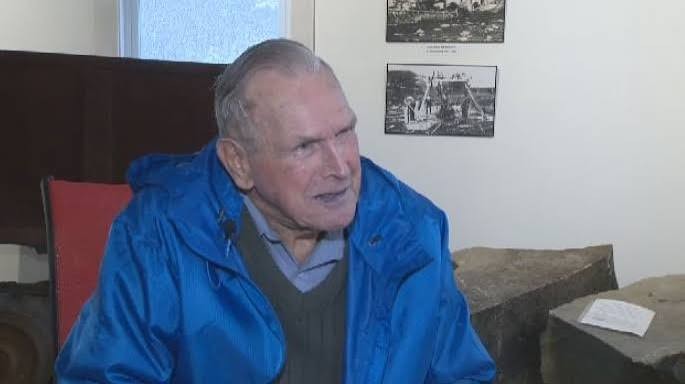
Dan Blankenship and Triton Alliance (David Tobias)
A steel tube, a camera, and many questions.
What they found. In 1971, Borehole 10-X reaches about 235 feet (72 m). Unclear camera images, which some read as chests or human remains: nothing has been confirmed.
The handover. Blankenship settles on the island in 1970; Tobias will sell his share to the Laginas in 2006.
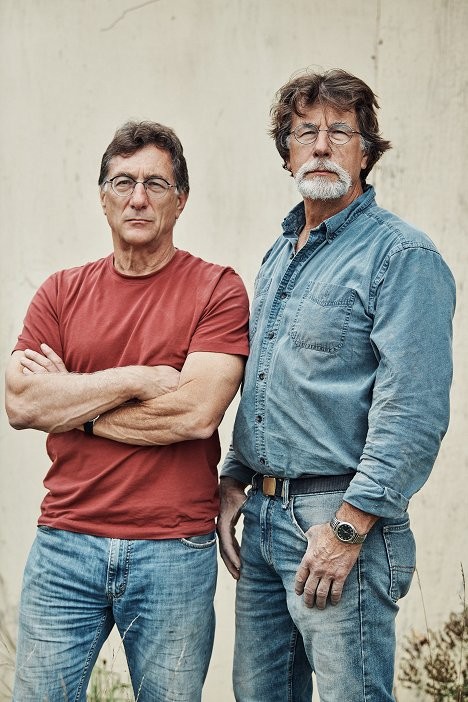
Rick and Marty Lagina (Oak Island Tours)
Two brothers from Michigan, cameras, and the quest goes on.
What they found. A medieval lead cross (Gary Drayton, Smith's Cove), a Portuguese coin of 1369-1371 (Lot 5), buttons of British regiments, human bones at borehole H8 (provisional DNA analysis), leather soles carbon-dated between 1492 and 1662.
The handover. No treasure has been found to date.
Last review: October 2026 · Unofficial site · Legal notice (FR) · The Blog