🌐 ENGLISH VERSION
This site was written in French, and this is its English translation. Small differences or imperfections are possible: the French version remains the reference. The reader comments area and the search results may still appear in French.
Your opinion matters: tell me what you would change or add. Use the contact form on the home page or leave a comment on the Blog (English and French both welcome).
THE HISTORICAL TIMELINE OF THE ORIGINS
“From the pulley of 1795 to the buried secrets of the McGinnis family.”
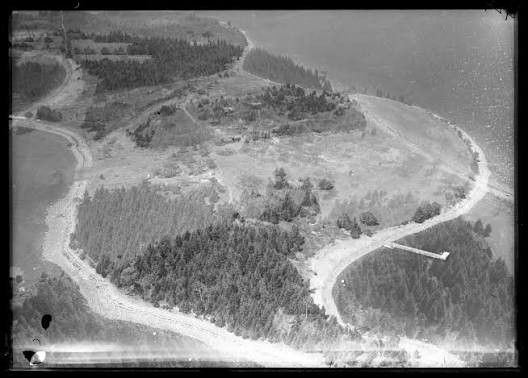
THE DISCOVERY OF THE SHAFT (1795)
It all begins in the summer of 1795. A 16-year-old boy named Daniel McGinnis is exploring the uninhabited island when he notices a strange circular depression in the ground, just beneath the branches of a sturdy old oak. On one of the branches, an old ship's pulley is still hanging, pointing directly at the disturbed ground.
Intrigued, Daniel comes back the next day with his two faithful friends, John Smith and Anthony Vaughan. Armed with shovels, they start digging and quickly discover that an artificial shaft has been dug there. Every 10 feet (3 metres), they hit heavy platforms of solid oak set into the earth. Lacking the equipment to go further because of the hardness of the work, they mark the spot, thus launching more than two centuries of treasure fever.
A troubling detail often passed over in silence: the very first edition of the History of the County of Lunenburg, published in 1870 by Judge Mather Byles DesBrisay, does not list Anthony Vaughan among the three discoverers — it names instead a certain Samuel Ball.
SAMUEL BALL, THE FORGOTTEN OWNER
Born a slave around 1765 in South Carolina, Samuel Ball won his freedom by enlisting in the British Loyalist militia during the American War of Independence. At the end of the conflict, like thousands of Loyalists, he crossed to Nova Scotia. After a stay in Shelburne and then Chester, he bought his first lot on Oak Island in 1787, for the sum of eight pounds.
Over the decades, patiently farming his land, Ball bought lot after lot — until he owned nine, about 36 acres, to which were added about a hundred acres on the neighbouring mainland and the whole islet of Hook Island. When he died in 1845, this former slave turned farmer was, without question, the largest landowner in the whole history of Oak Island — a landed fortune that has fed many theories about what he might have found, or known, on his own land.
THE VAUGHANS: FARMERS BEFORE THE LEGEND
Long before 1795, the island was already a surveyed area. In 1762, the official survey of the bay divided Oak Island into 32 lots of 4 acres — a simple tax document, not a treasure map. It is in this context that Anthony Vaughan Sr. (1750-1835), a former British officer, bought Lot 14 in 1781: the tax records of 1794 confirm him as a resident farmer on the island, alongside his son of the same name.
A real debate among historians remains, moreover, over the identity of the “young” Vaughan present at the discovery: the traditional accounts speak of a “16-year-old boy”, which would match Anthony Vaughan Jr. (born in 1782) — but some researchers argue that it may rather have been the father, then aged 45. What is certain is that almost everything we know today about the discovery of 1795 comes from a single testimony: the one Anthony Vaughan, by then the last survivor of the original trio, gave in 1849 — at the age of 67 — to Robert Creelman of the Truro Company. It is this account, then passed on by Jotham McCully in the press of the time, that fixed the legend for all later generations.
THE McGINNIS SISTERS: A FAMILY'S MEMORY
His name is also written McInnes or McInnis before settling as McGinnis. His birth and parents are unknown, and his age in 1795 is disputed: tradition speaks of a 16-year-old boy, but genealogical research puts his birth in 1758. According to a specialist site citing that research, he bought four lots on the island between 1788 and 1794, married in Lunenburg in September 1795, had a son baptized in 1797, and died in early 1827; Anthony Vaughan was one of the executors of his will. He is said to have been buried on the island, but no grave in his name has been identified.
The three McGinnis sisters (Joan, Jean and Joyce), direct descendants of Daniel McGinnis, one of the three discoverers of the Money Pit, came to the island in Season 3 (episode 13). There they confirmed a family legend that Daniel's companions found a “decoy treasure” in the shaft, and they gave the team a small gold cross, a family heirloom. A family tradition also speaks of chests of riches taken from the ground at the time, with part of the truth hidden: we found no source that confirms it.
Some time later, Joyce, the third sister, passed away. Jean and Joan came back to the island in her honour (Season 4, episode 15). Rick Lagina accompanied them to the foundation ruins of Daniel McGinnis's house, on the west end of the island, where they placed a commemorative object under a foundation stone. The site is now officially listed and protected as a cultural and historic landmark by the province of Nova Scotia.
The third of the McGinnis sisters, descendants of Daniel McGinnis, she came to the island with her sisters in Season 3 and shared the family's stories with the team. After her death, her sisters placed an object in her memory at their ancestor's family home, with Rick Lagina by their side: the island thus keeps a trace of her memory.
Open questions (speculation). Why was Daniel McGinnis on the island that day, and who was really with him: Vaughan and Smith, or Vaughan's father? Was he 16, or over 30? These points are not settled. As for the family's gold cross, it cannot be independently verified.
THE PRESS ARCHIVES & THE FIRST DIGGING COMPANIES
From the 19th century on, the newspapers of the day seized upon the mystery, notably the famous Liverpool Transcript in 1857, revealing to the public the details of the flooded shaft. It was at this time that the first structured digging companies came into being, leaving behind capital archaeological reports that the team analyses today in the War Room.
The Onslow Company (around 1802-1804 depending on the source): This is the first company to take over the worksite of the three young boys. Digging deeper with heavy equipment, they discovered layers of charcoal, brick and Caribbean coconut fibre serving as a filter. At 90 feet (27 metres), they are said to have pulled out the stone slab engraved with symbols handed down by tradition (according to Wikipedia, no original document of the company survives), before the shaft was suddenly flooded by hundreds of litres of seawater via the artificial flood channels.
The Truro Company (1849): Faced with the water blockade, this company used the first auger drilling systems. According to the accounts reported, at more than 30 metres' depth, the auger passed through a spruce platform, an empty space, and then brought up three links or couplings of an ancient-made chain of pure gold, which some interpreted as a sign of chests buried under the mud; this interpretation has never been confirmed. Wikipedia, for its part, retains only pieces of metal, oak and spruce; the company dissolved around 1851.
The Oak Island Association (1861): In the wake of the true gold rush that set Nova Scotia ablaze in the early 1860s, wealthy investors formed this new company and brought steam engines and industrial pumps to the island for the first time. This was no longer a dig with shovels: it was a large-scale mining operation, but just as fruitless as the earlier ones. According to Wikipedia and Oak Island Tours, the association was formed on 3 April 1861; the Money Pit was cribbed to 108 feet and the deepest shafts reached 120 feet. According to Oak Island Tours, a flood tunnel was struck around 1864 on the east side of the Money Pit and could not be shut off; engineers judged the shaft unsafe. The association ended around 1865-1866 depending on the source.
The Halifax Company (1866-1867): According to Wikipedia, this company, formed in 1866 to focus on the main shaft, drilled exploratory holes that brought up wood, coconut fibre and blue mud, then gave up in 1867.
A few isolated finds (1878 – around 1890): In spring 1878, according to a chronology of the searches, Sophia Sellers, daughter of Anthony Graves, was plowing a field between the Money Pit and Smith's Cove with two oxen when the ground gave way: the team fell into a well-like hole about 15 to 18 feet (4.5 to 5.5 m) deep and 6 to 8 feet (1.8 to 2.4 m) wide, later known as the "Cave-in Pit" or "Sink Hole". The 1893 prospectus of the Oak Island Treasure Company tells the episode ("about sixteen years ago") and gives ten to fifteen feet (3 to 4.5 m) instead. In 1885, an old-style boatswain's whistle was found on the Smith's Cove shore: bone or ivory according to the chronology, "stone" according to the prospectus. Around 1890, a copper coin weighing about 1.5 ounces (42 g) was found on the island: the prospectus says it was dated "1317", while another chronology hesitates between "1317" and "1713", which changes its meaning a great deal. Treat with caution.
The Oak Island Treasure Company (1893-1900): Founded in Boston in 1893 around Frederick Blair, this company launched a share offering with a prospectus, summarized by the Eastern Chronicle of 5 April 1894 (reprinted in 1935). This promotional text claims it can be "proven" that there is a shaft about 13 feet (4 m) wide and 100 feet (30 m) deep, linked to the ocean by a 365-foot (111 m) tunnel. For the very first company, it names Dr. Lynds of Truro, Colonel Robert Archibald, Sheriff Harris and Captain David Archibald, and reports a reading of the carved stone ("ten feet below are two million pounds buried") without vouching for it. The new company's treasurer, H. C. Tupper (1893-1896 according to an archive note), wrote to Blair on 21 August 1894 that they were down about 47 feet (14 m) in the "Cave-in": an old circular shaft, never cribbed, where he would not be surprised to find "a box or two".
The pumps and the province (1896-1897): According to a chronology, the Money Pit was drained to 70 feet (21 m) then deepened to 97 feet (30 m) in 1896, and a flood tunnel was struck at 111 feet (34 m) on 9 June 1897. On 24 February 1897, T. P. Putnam, the company's manager, wrote to the Premier of Nova Scotia, George Murray: the company said it held from the owner the ownership of any relics found and the right to dig by lease, and asked for written confirmation of what the province would levy on any "treasure trove": nothing on the first $100,000, then 2% above that. A 1897 newspaper reported pumps covered by about 80 feet (24 m) of water rising and falling with the tide, and a plan for 30-foot (9 m) holes near the shore, each loaded with 100 pounds (45 kg) of dynamite to be fired together to cut off the water. According to a company report, the hard blue clay runs down to about 110 feet (34 m), followed by a brown marl; only the Money Pit gave, by drilling, "puddled" blue clay between 125 and 170 feet (38 to 52 m).
The 1900 shaft: According to F. Blair's report, a new 5 x 8-foot (1.5 x 2.4 m) shaft was sunk beside the old Money Pit. On 13 February 1900, at 102 feet (31 m), it met the collapsed cribbing of the Truro Company's old pit, old timber down to 96 feet (29 m), then a "Halifax tunnel" whose bottom was at 106 feet (32 m), as well as tools left by the Truro Company. At 113 feet (34 m), the water exceeded the pumps' capacity and the work was abandoned for lack of funds. On 2 June 1900, F. Burrows sent Putnam a sketch of the holes drilled at the bottom of the pit: no wood had yet been found in the holes, and a clear space in the south-east let a plumb line move about, which limited any drilling done from the surface. According to a chronology, the May-June 1900 drilling found nothing of note; at the end of the year, Blair bought out the other shareholders and kept the lease.
Archive sources: Public Archives of Nova Scotia (Halifax), R.V. Harris fonds, MG 1, vols. 384 and 390 (1893 prospectus, 1894 Eastern Chronicle article, company correspondence, F. Blair's 1900 report); chronologies of the Oak Island searches. The company's texts are promotional documents: read them with caution.
The Old Gold Salvage and Wrecking Company (1909-1911): Led by Captain Henry L. Bowdoin, this company attracted an investor destined for greatness: Franklin D. Roosevelt, then a 27-year-old law clerk. In the summer of 1909, he stayed on the island to follow the work, and his interest in the mystery would never fade. The family's attraction went back, moreover, to his grandfather, Warren Delano, who is said to have already invested in the Truro Company in 1849.
Born in Hyde Park, New York, 32nd President of the United States from 4 March 1933 until his death. His name is linked to Oak Island: as a young law clerk he is said to have taken part in the 1909-1911 venture, and History UK also names his friend the explorer Richard E. Byrd Jr. as having encouraged him to support searches. The sources we consulted do not agree on the details of his involvement.
William Chappell (1931): Drawn by a 1928 New York press article, William Chappell had a 12 × 14-foot shaft dug in 1931 down to 163 feet (about 50 m), southwest of where the 1897 shaft was believed to be. At about 120-127 feet depending on the source, the crew found an axe, a fluke anchor and a pick, identified as a Cornish miner's pick; its owner could not be determined, as the ground was cluttered with debris from earlier digs. His son Mel Chappell later appears among the former lot owners who became shareholders of the Triton Alliance.
Gilbert Hedden (1934-1936): A New Jersey industrialist, Gilbert Hedden became fascinated by Oak Island after a New York Times Magazine article published on 8 May 1928. According to the timeline on thecurseofoakisland.com, he linked the island to a map in Harold T. Wilkins's book about Captain Kidd and travelled to England to consult the author. He bought the east end of the island (in 1935 or 1936, depending on the source) and led the search until 1936, before handing over to Edwin Hamilton, an engineering professor at New York University. An engraved “H + O” stone found at Joudrey's Cove in 1936 is linked to the Templars by some; according to a single source, he also found notched timbers with Roman numerals at Smith's Cove and a stone triangle. These accounts are not independently verified.
American industrialist and politician. Vice-president of the Hedden Iron Construction Company in Hillside, New Jersey, from 1919, he was mayor of Chatham Borough from 1934 to 1938. He led the search on Oak Island from 1934 to 1936. The shaft that bears his name (the “Hedden Shaft”) appears on the dig plan on the “Money Pit” page.
The Restall family (1959-1965): Robert Restall moved to the island with his family in 1959 and carried on the search until 17 August 1965, the day four people lost their lives in a shaft. See the page Tragedy, memorial & safety.
Dan Blankenship and the Triton Alliance (1966-1976): According to the timeline on thecurseofoakisland.com, Dan Blankenship began operations on the island in 1966, and Triton Alliance Ltd., an investor company chaired by David Tobias, was formed around 1969 (date confirmed by two sources); he and Blankenship buy most of the island (in 2006, Tobias would sell his share of the company Oak Island Tours to the Lagina brothers). In 1970-1971 the hole known as “Borehole 10-X” was drilled down to about 235-237 feet depending on the source. In 1971, a camera lowered to 230 feet reportedly showed shapes that some interpret as chests, beams and even a human hand; this reading remains heavily disputed. In 1972 Blankenship dived into the shaft himself and described a bottle-shaped cavity. In 1976 Triton Alliance took over tourism on the island.
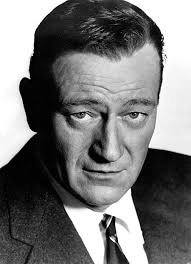
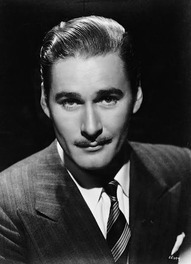
Famous names: several public figures are linked to Oak Island, with very different degrees of certainty. Two sources (History UK and the glossary of thecurseofoakisland.com) agree on John Wayne: around 1970, a mining company partly owned by him leased drilling equipment to Triton Alliance. They also agree on Errol Flynn, who reportedly wanted to buy into an Oak Island syndicate without succeeding; according to the glossary, this was in 1939 and the digging rights belonged to another group. The glossary also describes the heir Vincent Astor and Rear Admiral Richard E. Byrd Jr. as passive investors, without dates; Wikipedia lists them among the mystery's supporters. None of this proves that a treasure exists.
The Oak Island Treasure Act (2011): Since 1 January 2011, research on the island has been governed by a Nova Scotia law, the Oak Island Treasure Act (chapter 39 of the Acts of 2010), which replaces the former Treasure Trove Act. The Minister of Natural Resources may grant a licence for all or part of the island: it gives the right to search for, recover and keep treasure, in return for a royalty at a rate set by the Minister. By “treasure”, the law means precious stones or metals that are no longer in their natural state. Any discovery must be reported in writing, under oath, to the Minister; the licence cannot be transferred without his written consent, and may be revoked if its conditions are not respected. On private land, access requires the owner's agreement.
Last review: October 2026 · Unofficial site · Legal notice · The Blog