🌐 ENGLISH VERSION
This site was written in French, and this is its English translation. Small differences or imperfections are possible: the French version remains the reference. The reader comments area and the search results may still appear in French.
Your opinion matters: tell me what you would change or add. Use the contact form on the home page or leave a comment on the Blog (English and French both welcome).
THE COLLABORATORS AND THE SCIENTIFIC TEAM
“The faces, the experts in the shadows and the life stories that make Oak Island's heart beat.”
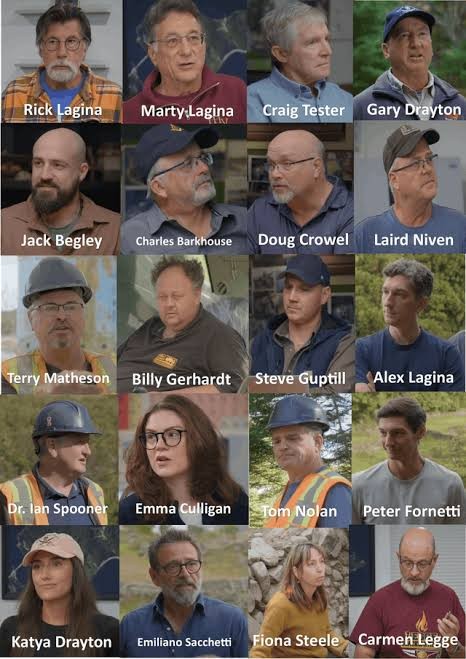
1. THE FAMILY AND THE YOUNG GENERATION
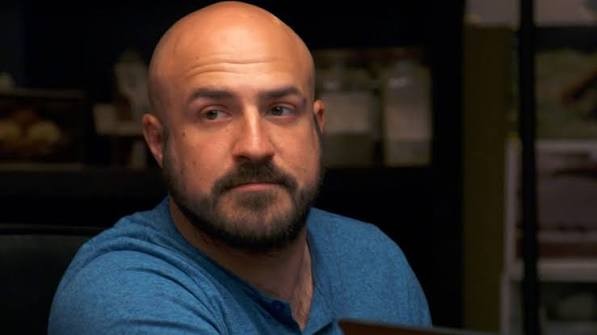
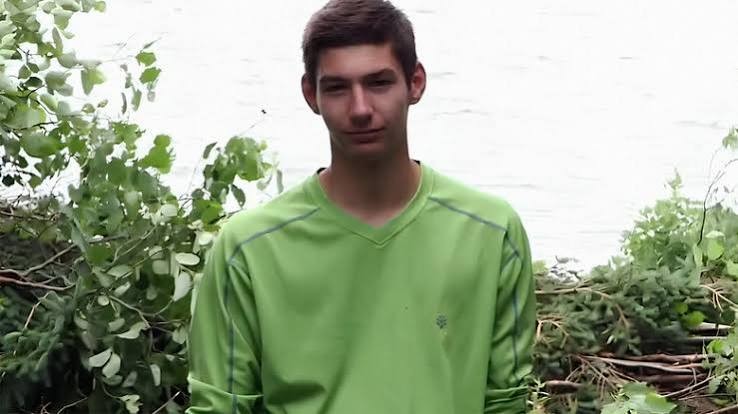
Son of Mary Tester and stepson of Craig Tester, Jack is the heart of the raw energy in the field. Marked by the personal tragedy of the sudden loss of his younger brother Drake Tester in 2017 at the age of 16, Jack throws himself body and soul into the work to honour his memory and see the mystery through to the end.
Always ready to take on the most thankless physical tasks, he spends his days on his knees in the mud sorting and sifting the spoil from pressurised drilling alongside Gary Drayton. His constant passion and unshakeable perseverance make him an irreplaceable member of the quest, analysing every sediment in the stubborn hope of finding the missing link of the story.
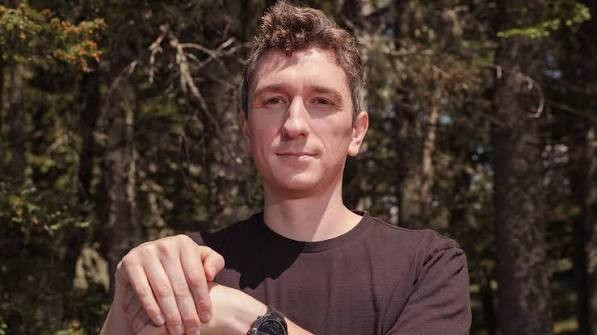
Son of Marty Lagina, Alex grew up in Michigan to the rhythm of his father's great industrial successes. Very gifted in the sciences, he entered a prestigious engineering university and earned his degree in Civil Engineering. Passionate about underwater worlds, he obtained deep-water technical diving certifications so he could work personally in the island's flooded areas.
Both a certified diver and a field engineer, he brings his technical eye to complex operations and supervises the island's topographic surveys. He validates the load calculations of ROC Equipment's drilling platforms and leads the surface geomagnetic scans. Outside Oak Island, he manages a large part of the automation and agricultural engineering of the family wine estate Mari Vineyards in Traverse City, applying the same scientific rigour in the field as in the laboratory.
Son of Terese Lagina (the sister of Rick and Marty), Peter joined his uncles on the island very early. A member of the family's third generation, he holds a university degree in data management and information systems. He settled into the command centre in the mid-2010s to bring order to the War Room, which was then swamped with mountains of archive reports and contradictory technology data.
Very close to Rick, he takes an active part in the command centre's logistics, sorts the artefacts, digitises the old maps brought by Doug Crowell and provides the new generation's steadfast support during the big meetings with the world's metallurgy experts. Discreet but indispensable, he is the heart of the family continuity of this adventure.
2. FIELD EXPERTS, ARCHAEOLOGISTS AND HEAVY INDUSTRY
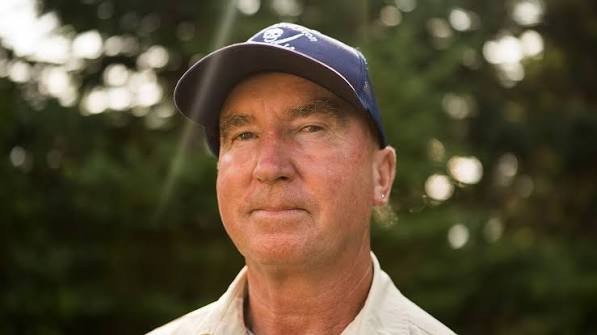
A native of Lincolnshire in England, Gary Drayton developed from childhood a consuming passion for “treasure hunting” along England's historic rivers. After emigrating to Florida, he became a world-renowned professional metal detectorist, writing several reference books on the search for gold (including "The direct method to find gold jewelry"). Before being recruited for his unique expertise on Oak Island's mineralised soils, he made a fortune in Florida by personally locating, under the sand of the beaches, a Spanish conquistador's ring set with a raw emerald estimated at more than 300,000 dollars.
Walking the island with his custom-configured detectors, he is the author of the most spectacular finds, including the famous 14th-century medieval lead cross at Smith's Cove, the Portuguese tornês of 1369 on Lot 5 and the military buttons. Endowed with an extraordinary intuition, his explosive exclamations like "Holy Shamoley!" are part of his legend and punctuate the surface discoveries.
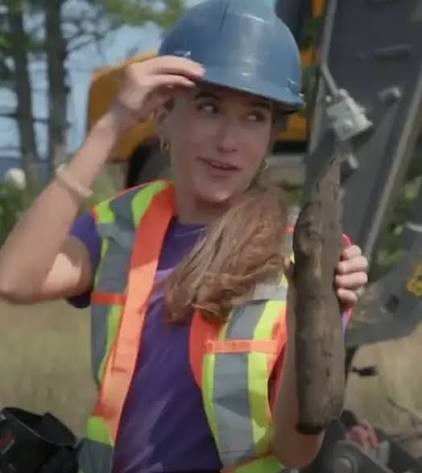
Katya Drayton is Gary Drayton's daughter. She made her debut on the show in January 2025 (season 12), joining the Smith's Cove team to handle the metal detector. She learned the trade alongside her father, whom she has accompanied in his searches since the age of seven.
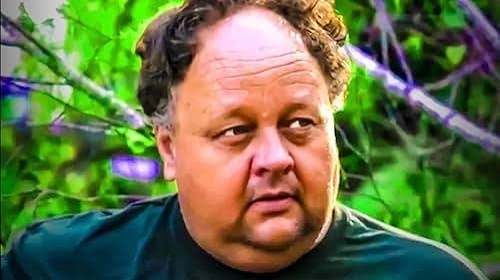
Billy Gerhardt is a major industrial figure of Nova Scotia's South Shore. Owner and founder, in 1999, of the company Gerhardt Property Improvement based in Lunenburg, he runs huge earthmoving and civil engineering projects. A very wealthy businessman but of legendary humility, Billy is above all a great enthusiast of colonial history who uses his personal fortune to fund projects to safeguard and restore Acadian heritage sites throughout the province.
On the island, Billy is the absolute master of massive excavations. At the controls of his giant excavators of more than 30 tonnes, he digs to extreme depths in the heart of the swamp with a surgical precision essential to preserve the ancient structures. Able to scrape the ground centimetre by centimetre on Lot 5 so as not to break the relics, his mastery of mechanical forces makes him the unavoidable physical pillar of the worksite.
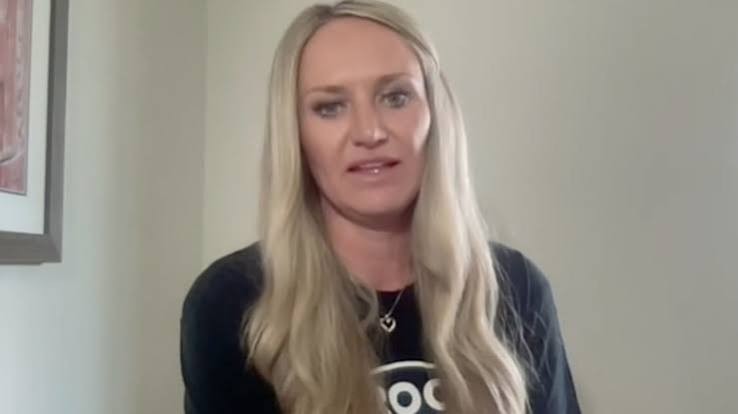
President and director of the major company ROC Equipment (founded in the heart of the drilling industry), Vanessa Lucido brings to the island the heavy industrial power needed to attack the Money Pit at great depth. Leading the drilling crews with a master's hand, she oversees the deployment of the giant oscillators needed to drive the 4-metre-wide steel casings into solid rock more than 50 metres underground.
Under her logistical direction, her teams also run vacuum suction excavation technologies (pneumatic sifting), making it possible to extract mud from deep shafts in an ultra-safe way and to intercept the smallest underground relics with surgical precision without ever damaging them.
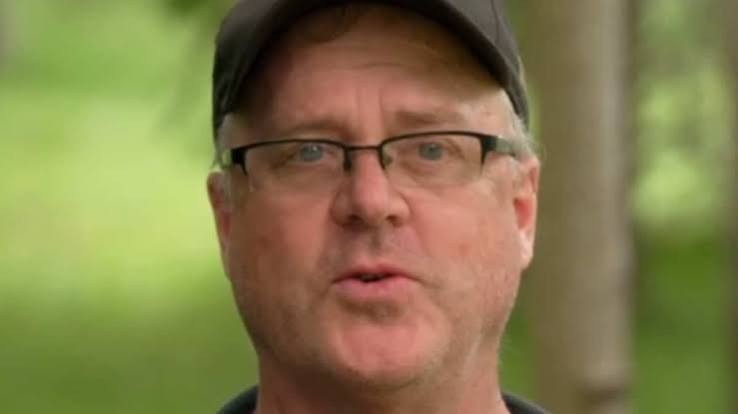
Laird Niven is the official archaeologist appointed by the province of Nova Scotia to scientifically oversee every excavation. Holder of a Master's degree from Memorial University of Newfoundland and former president of the Nova Scotia Archaeologists' Association, he spent more than 30 years leading major historical digs in Canada (notably at the UNESCO site of Grand-Pré and the fortifications of Halifax) before coming to the island.
In the field, Laird is the guarantor of legality and science. Whenever an excavator or a metal detectorist uncovers a wooden structure or ancient masonry, the machines stop to give him control of the ground. Writing the official reports for the government, he makes sure every discovery respects the province's strict archaeological protocols, protecting the island against any reckless destruction.
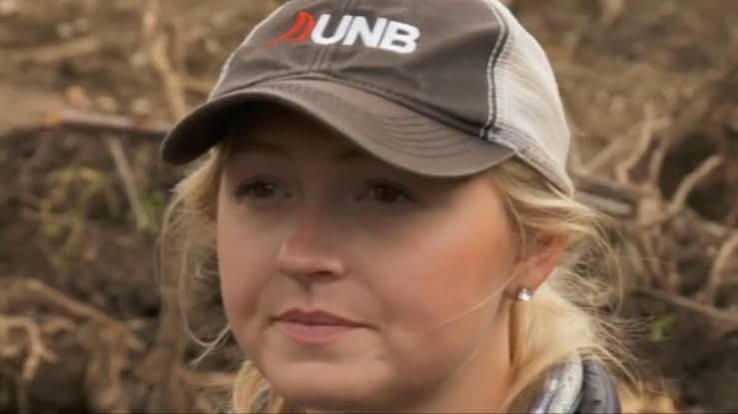
A native of Digby, Nova Scotia, Miriam Amirault is a brilliant archaeologist who graduated top of her class in Anthropology and Archaeology at Acadia University. Spotted by Professor Laird Niven for her exceptional meticulousness and her specialisation theses on coastal micro-sediments and colonial occupations, she was brought into the field team on the island.
Having become a fan favourite, Miriam marked the show with her scientific rigour during the painstaking digs with trowel and brush on the swamp's stone road. Working tirelessly to map the assembly of the European rocks, she was forced to leave the island suddenly following the great political and bureaucratic blockade imposed by the ministry after the discovery of the Mi'kmaq artefacts, leaving the memory of a scientist of absolute integrity.
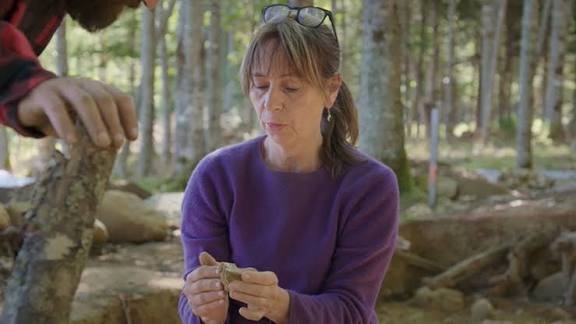
Fiona Steele is an archaeologist. She joined the island's archaeological team in season 11, then in season 12 led the excavations around the foundations of Lot 5.
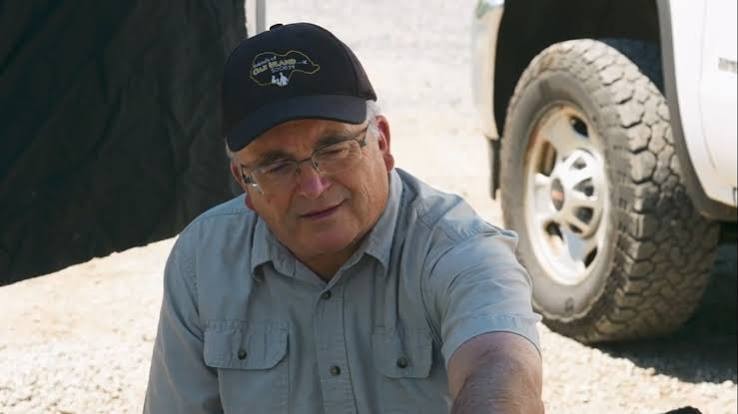
Charles Barkhouse is a researcher, local historian and official guide of Oak Island whose family has been rooted in the region for generations. A direct descendant of a line of German settlers who arrived in Mahone Bay in 1753, the island's history runs in his veins. A member of the board of the Oak Island museum, he has spent more than forty years collecting the intimate reports, original maps and logbooks of all the former digging companies (Onslow, Truro, Chappell), becoming the secret adviser of most of the island's researchers since the 1980s.
Charles guides the team to avoid digging where the earth has already been turned over in the past, thus avoiding major losses of time and money. He passes on respect for the memory of the earlier searchers to visitors from around the world who tread the bay's soil.
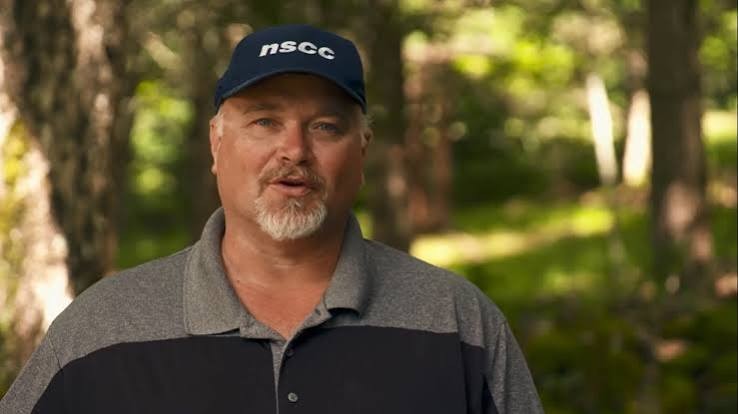
Doug Crowell is an elite archive researcher, historian and genealogist renowned in Canada. He is the co-founder of the well-known historical research group Centre for Oak Island Research (COIR). Specialised in tracking down colonial documents, Doug has the unique ability to trace the island's land-ownership lines and parcel transactions back to the very first British Crown registers dating from 1762.
A tireless archive researcher, he is able to find old original plans, period journals or 18th-century sea charts in private and military libraries across Europe. It was he who led the Halifax detective work to find the 27-metre (90-foot) Stone forgotten in the basement of the Halifax Seed Company. His documentary rigour is the team's number one shield against the attacks of sceptics.
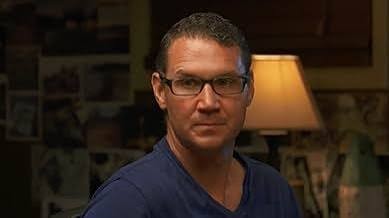
Steve Guptill is a very high-level professional land surveyor, specialised in the topography of heavy engineering worksites in Nova Scotia. Equipped with high-precision satellite survey stations, he records the exact coordinates of the smallest nail, the smallest core hole or the smallest casing driven by Vanessa Lucido.
Steve handles the 3D GPS mapping essential for targeting the underground galleries. In the War Room, his computer models make it possible to overlay the 19th-century plans on the modern boreholes, giving Marty and Craig the perfect axis to guide the drills more than 50 metres underground with surgical precision.
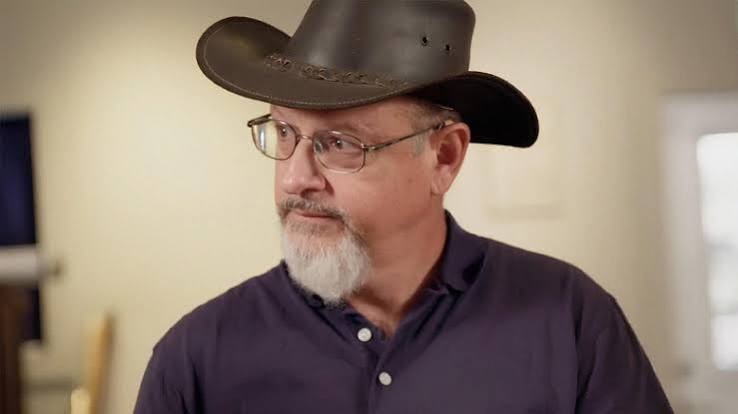
Carmen Legge is a blacksmith by training and one of North America's greatest experts in ancient metallurgy and colonial tools. He is the resident expert blacksmith of the Ross Farm Museum, a living museum of 19th-century farming history and techniques in Nova Scotia. A renowned teacher and university researcher, his expertise on the carbon content of ancient iron is authoritative before the Crown.
He works actively with the team to date and identify the precise origin of any galleon nail, old chest fitting or Spanish spike between the 16th and 18th centuries. Simply by observing the bevel of the cut, the hammering method or the oxidation of the hand-forged steel, he draws precious clues to estimate the age of a piece of rusty iron.
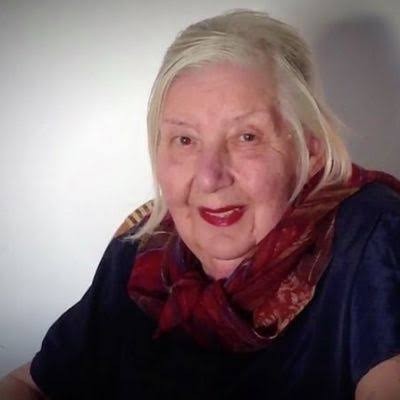
Zena Halpern (1930-2018) was an internationally known American historian, researcher and author, specialised in the study of pre-Columbian transatlantic crossings. Passionate about medieval mysteries, she served as director of the New England Antiquities Research Association and founded the National Antiquities Archaeological Society (NASS). For more than thirty years, she combed the libraries of Europe and private archives to track down evidence of the knights' secret exodus to North America.
Having become Rick Lagina's spiritual confidante and historical adviser, she upended the whole history of Oak Island by bringing into the War Room a monumental document: the “Cremona Map”, a drawing presented as of Templar origin, written in Old French and dated 1347 (its authenticity is disputed). This secret document, which had been entrusted to her by the elite researcher Don Ruh (from the confidential papers of a collector), is supposed to describe Oak Island centuries before its official discovery, with annotations such as "The Well", "Smith's Cove" and "The Valve". Rick Lagina inherited the absolute whole of her boxes of private notes, her unpublished manuscripts and her secret maps, saying he wanted to continue Zena's work.
3. THE LABORATORY OF CUTTING-EDGE SCIENCE AND RESEARCH
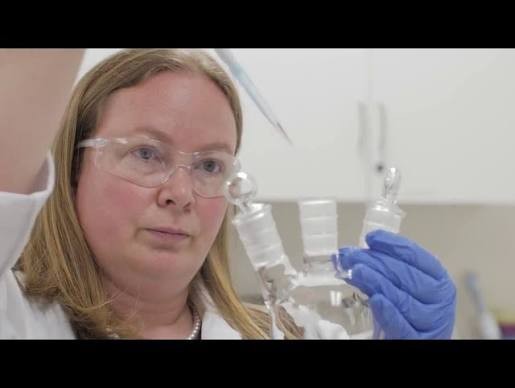
Dr Christa Brosseau is a leading scientist, full professor of chemistry and holder of a prestigious Canada Research Chair at Saint Mary's University in Halifax. Author of dozens of major international publications on spectroscopy and advanced molecular analysis, she puts her elite university laboratory at the service of the project.
Based at Saint Mary's University, this world-renowned researcher determines, by X-ray (XRD diffraction) and electron microscopy, the origin, purity and dating of the island's ancient metals (such as the lead cross or the silver brooch of Lot 8), scientifically certifying whether a piece comes from a medieval European mine.
Dr Xiang Yang is an engineer and senior technical expert in molecular imaging, in charge of the electron microscopy platform at Saint Mary's University in Halifax. A world specialist in micro-surface analysis, she works closely with Dr Christa Brosseau to analyse the island's finds.
Her mastery of nanometric imaging and electron scanning makes it possible to detect crucial micro-clues invisible to the naked eye. According to the show, it was under her lenses that parchment fragments brought up from the boreholes were examined: micro-pigments of ancient ink, traces of animal hair or details of wear. These observations have not been independently confirmed.
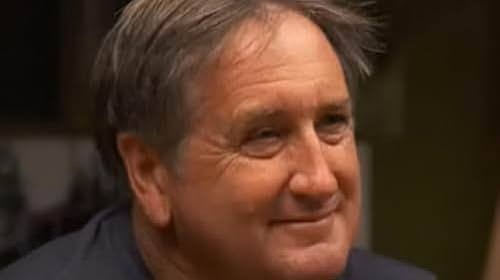
Dr Ian Spooner is a renowned geoscientist, full professor in the Department of Earth and Environmental Sciences at Acadia University. Holder of a PhD in Earth sciences from the University of Waterloo, he is a world authority on post-glacial environmental and hydrogeological change, having worked as an expert consultant for major geological and oil firms before studying Oak Island's water.
A leading university geoscientist, he analyses the water of the wells and the swamp sediments. His analyses found traces of dissolved gold and silver in the groundwater. These measurements are real, but they do not prove on their own that a treasure lies at the bottom of the Money Pit or of the Lot 26 well; their interpretation remains debated.
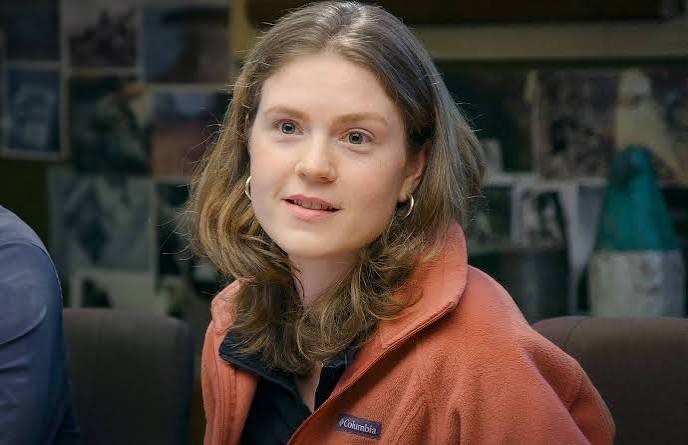
Emma Culligan is a brilliant young researcher and technical engineer integrated into the Oak Island laboratory. A graduate with honours in materials science, she was trained specifically in the handling of industrial mass spectrometers and non-destructive archaeometry. She was recruited directly by the university to lead the portable atomic detection unit in the field.
A young cutting-edge scientist, Emma works in the laboratory with X-ray fluorescence (XRF) technology. She analyses the atomic composition and exact signature of small metals, the lead fragments of Lot 5 and the old buttons found by Gary in order to certify whether they contain gold, silver or medieval lead, delivering metallurgical reports indispensable for validating the datings.
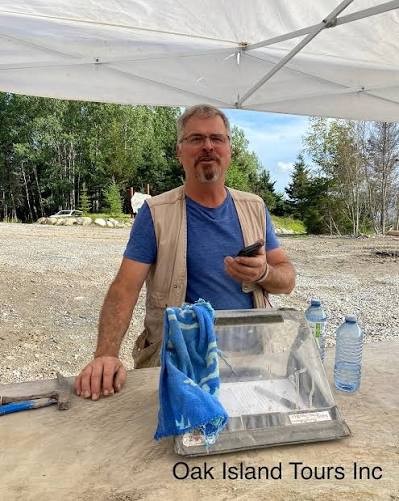
Terry Matheson is a local geologist. He joined the team in season 5 to analyse the spoil and the cores extracted from the island's various boreholes, then took part in the excavation of Smith's Cove.
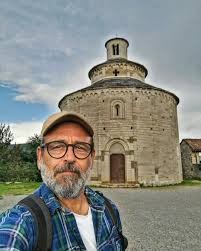
Emiliano Sacchetti is an Italian documentary maker and researcher, present on the show since 2023. He was tasked with continuing Zena Halpern's work on the links between the Templars and Oak Island, in particular around the Cremona document. According to this document, a 12th-century Templar knight, Ralph de Sudeley, would have carried treasures from Jerusalem to an “island of oaks” in America — a thesis that remains to be demonstrated.
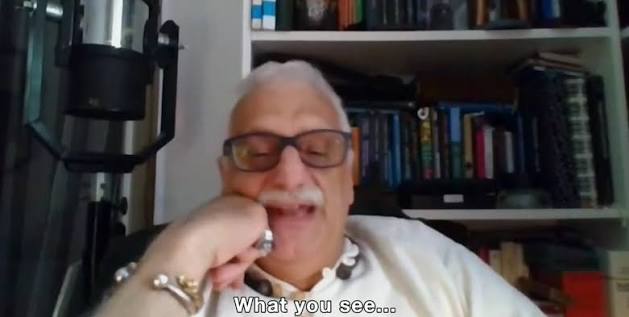
Portrait: still from the show The Curse of Oak Island (History), for illustration.
Adriano Gaspani is an archaeoastronomer and astrophysicist at the Brera Observatory in Milan. According to a specialist site, he has long studied the astronomical orientation of medieval European sites. On the show he analyses the alignments of Nolan's Cross (season 10, episode 22, “Starry Knights”), then those of the stone triangle and the stone piles of lot 15 (season 11, episode 17), using GPS positions recorded by surveyor Steve Guptill.
What is established, what is interpreted. According to the same source, he dates the cross to about 1200 and the lot 15 stone piles to about 1250; these dates rest on the assumption that the alignments are intentional. He concludes that the builders came from Europe and that the Templars are the most likely: this is his interpretation, not an established fact. Archaeoastronomy can date a layout, but not say who built it or why.
4. THE ELITE PROFESSIONAL DIVERS
Dan Misiaszek and his wife Kathy, nicknamed “Frog” and “Flash”, are professional divers. They went down into Borehole 10-X in Season 2 (the episode “The Big Reveal”, aired in January 2015), once the diving platform was finished and the safety rules were in place.
According to an episode recap, the aim was to reach 181 feet (55 m) in a 27-inch tube; the first dive was aborted at about 83 feet (25 m) because of poor visibility, tangled lines and a diver becoming wedged, and a second dive was called off for safety reasons. We found no source on their professional background.
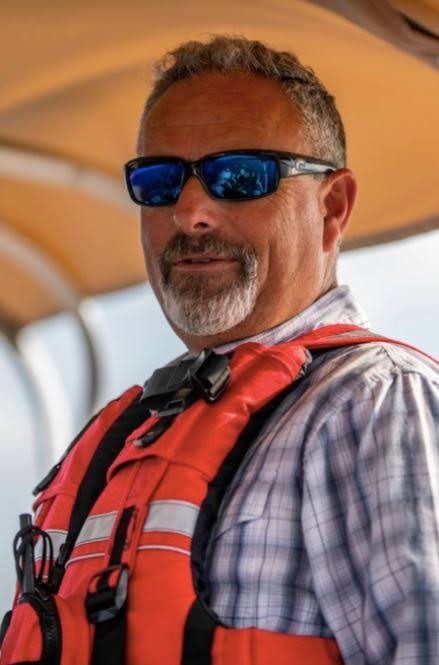
Tony Sampson has an exceptional life story. A former soldier in the famous British Royal Military Police, then a member of elite police units specialised in intercepting and checking ships against smuggling in the North Sea, he settled in Nova Scotia as a PADI Master Scuba Diver Trainer, holding one of the few licences in the province awarded for extreme under-ice and high-pressure hostile-water diving.
A former soldier and police officer in elite units, Tony takes part in all the complex zero-visibility dives. With unshakeable composure, he probes the thick mud of the swamp in search of naval structures, explores the rocky shores of Smith's Cove to locate the old outlets of the fan-shaped drains, and leads the maritime expeditions aboard the inflatable boats, ensuring the team's safety at sea.
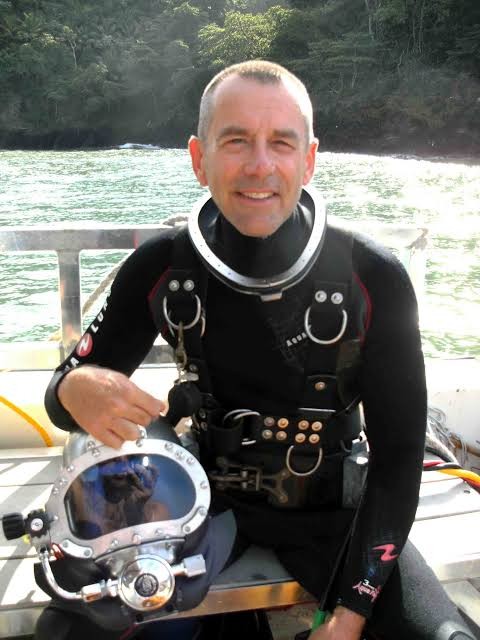
John Chatterton is a true world legend of deep technical diving. Famous for having discovered and identified the wreck of the secret German submarine U-869 at more than 70 metres' depth in the Atlantic, he masters complex breathing-gas mixes (Trimix) and extreme decompression procedures in a diving bell.
A world authority on wreck diving, John achieved the feat of physically descending more than 70 metres underground in the narrow, dark steel tube of the Borehole 10-X shaft. Braving monumental water pressure, sharp walls and complete, icy blackness, he explored the flooded cavern by feel to verify the historical observations of Dan Blankenship, bringing his world-class expertise to the encyclopedia.
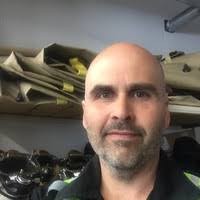
Mike Huntley is a professional diver from Kentville, Nova Scotia. Introduced to the adventure by his longtime friend Tony Sampson, he joined the team for light diving work around the Money Pit, notably suction and drilling through narrow tubes. Quickly noticed for his composure and rigour, he became a pillar of the island's most delicate underwater operations.
Alongside John Chatterton, he takes part in the dizzying dives of the Borehole 10-X shaft, and explores alone the depths of the C-1 shaft (named in tribute to Charles Barkhouse) and the DMT shaft (named in memory of Drake Maxwell Tester, Craig Tester's son). Having become Rick and Marty Lagina's trusted diver, he brings his expertise whenever the team must probe the unknown in the complete darkness of the underground waters.
Last review: October 2026 · Unofficial site · Legal notice · The Blog